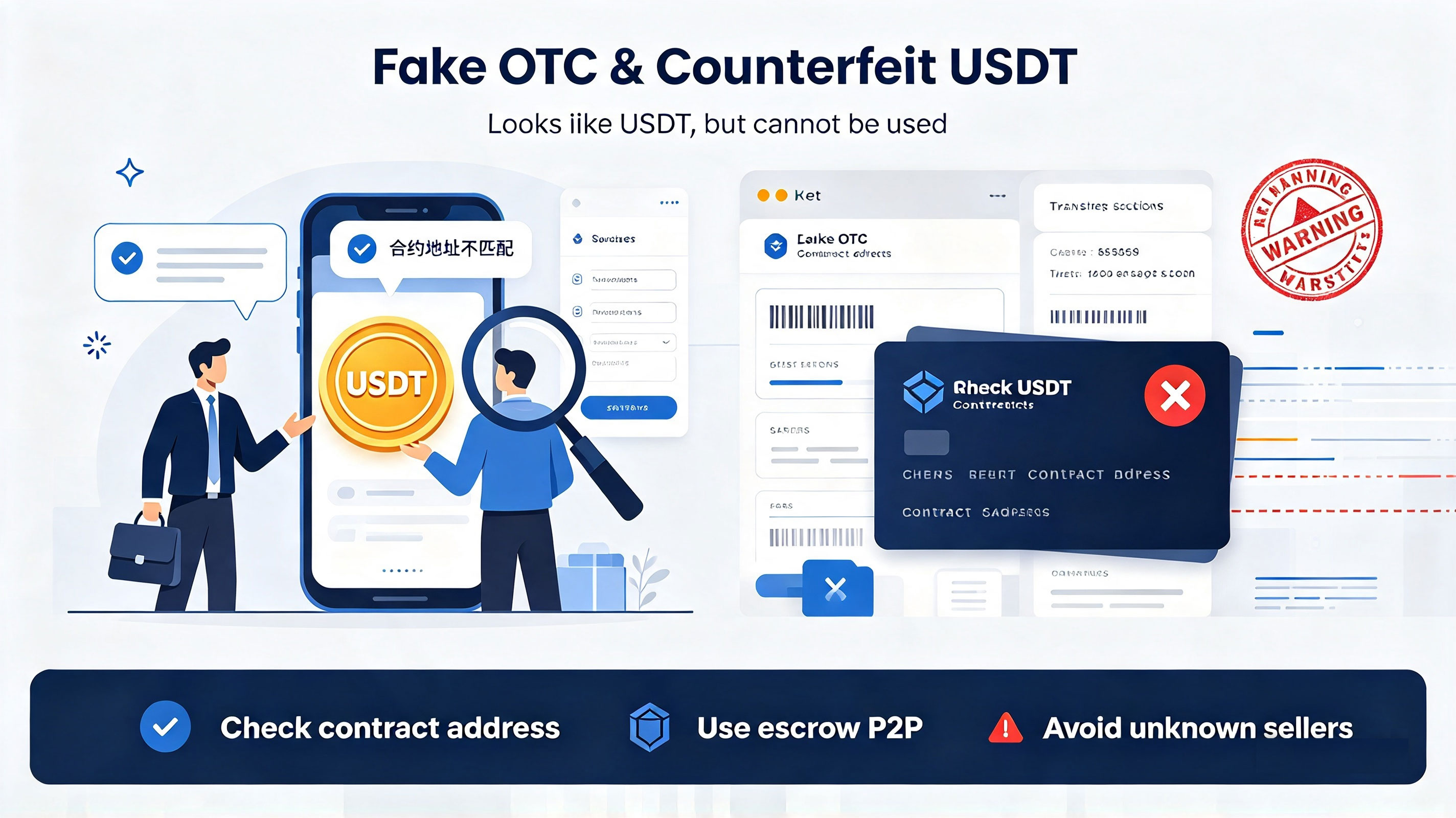
You end up with "fake USDT" that cannot be used after transfer. Many counterfeit USDT tokens circulate on the market, designed to look indistinguishable from genuine USDT.
Peer-to-peer trading conducted privately through messaging apps or in-person carries substantial risks. Scammers may send tokens that appear identical to genuine USDT — same name, logo, and decimal places — but are actually counterfeit assets created on the blockchain. These fake balances display correctly in wallets yet fail when you attempt to transfer, swap, or withdraw them.
Creating a token named "USDT" requires no special skills — anyone can issue one. Visual appearance provides no verification; the only reliable method is cross-checking the official contract address:
TRC‑20 USDT: TR7NHqjeKQxGTCi8q8ZY4pL8otSzgjLj6t
ERC‑20 USDT: 0xdac17f958d2ee523a2206206994597c13d831ec7
Assets sent from or held at addresses not matching these specifications are counterfeit. Furthermore, USDT purchased from unverified sources may be linked to criminal activity — even if acquired innocently, your wallet or exchange account could be frozen during investigations.
✅ How to protect yourself:
1. Use established exchange P2P trading platforms where funds are held in escrow — the platform releases payment only after confirming you have received genuine USDT
2. If private trading is unavoidable: verify the contract address before confirming receipt; test with a small amount first to ensure the assets are transferable
3. Exercise caution with prices significantly below market rate — "emergency sales" or "discounted USDT" are common lures
4. Retain full records of conversations, payments, and transaction receipts for evidence if funds become frozen